About me
I was raised in the interior of BC, where I met my (now) wife Sarah and we eventually moved to Vancouver Island, where we have lived for the past ~15 years. As a SCUBA instructor on the Island, I watched first hand as the all kelp forests at my favourite dive sites disappeared during the “Blob” marine heatwave, just over a decade ago. These events were a catalyst for the climate change research I do today.
As someone with both Stó:lō and Dutch ancestry, I feel that it is both my privilege and my responsibility to steward and research our shared coastal ecosystems. I want to make sure that my work directly benefits all of the humans who live near and rely on the waters that we call home here in BC.
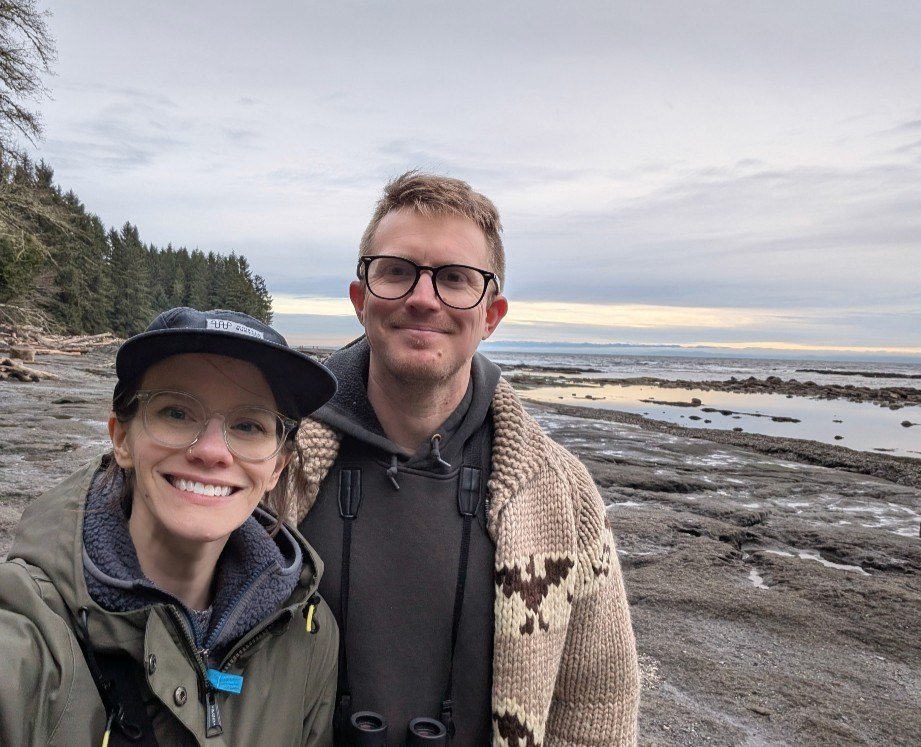
Brian and Sarah at Botanical Beach
My Education Background
PhD candidate focused on coastal ecology
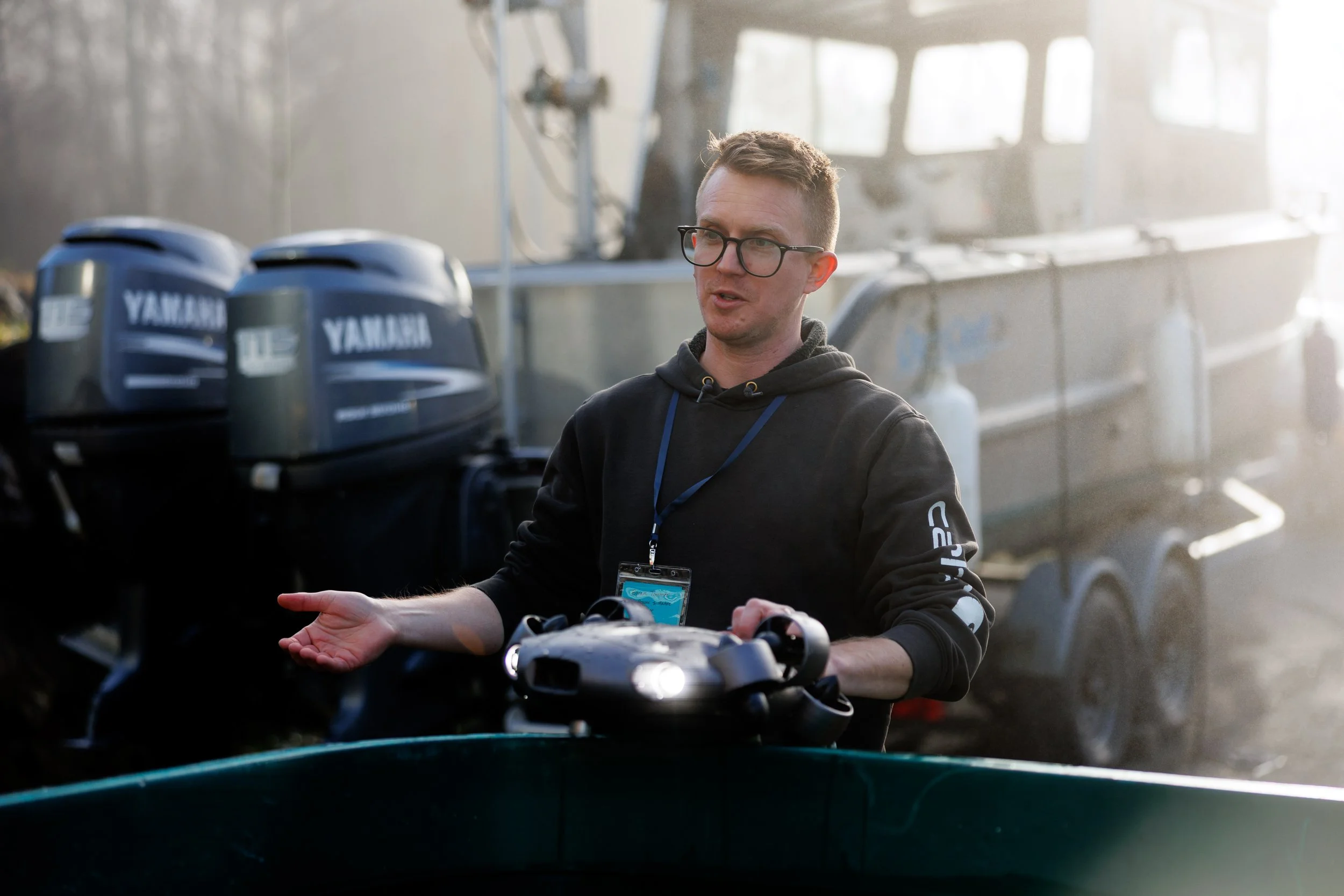
Brian demonstrating underwater drones
I am currently a PhD Candidate in Prof. Julia Baum’s lab in the Biology Department at the University of Victoria. My doctoral research brings together historical data and modern technology to better understand the impacts of climate change on kelp forest ecosystems, as well as whether kelp restoration strategies can mitigate habitat losses. Throughout my PhD I have helped build and worked in close collaboration with the Kelp Rescue Initiative, where I lead various field-based projects and outreach programs. It is important to me that my research directly supports Indigenous sovereignty, so I have also volunteered my time to support First Nations marine monitoring and habitat restoration programs during my PhD, helping build capacity through technical training and grant writing.
MSc in remote sensing
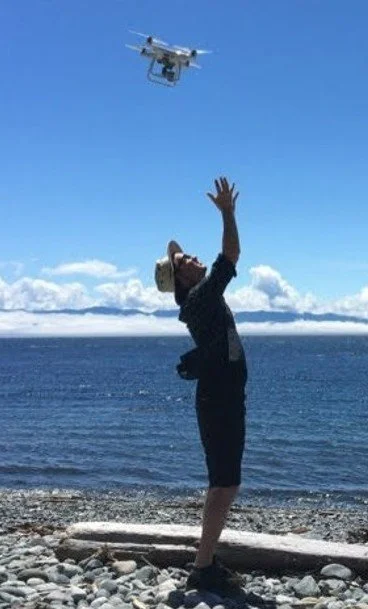
Brian catching an aerial drone
I completed my master’s degree in the SPECTRAL lab in the Geography department at UVic in 2022, focused on improving remote sensing methodologies (i.e., using aerial drones and satellites) to map and monitor kelp forests. My NSERC supported master’s research used hyperspectral radiometers to understand which wavelengths of light could best detect submerged kelp canopy, as well as multispectral drones to quantify how tides and currents affect our ability to monitor kelp forests. During my master’s my friend and colleague Sam Starko invited me to collaborate on a project in Prof. Baum’s Lab, piloting my underwater drone to survey kelp forest responses to a warming microclimate. Soon after, I discovered an unpublished historical intertidal dataset in the UVic archives, which formed the basis of my PhD pitch to Prof. Baum.
Undergraduate in Biology
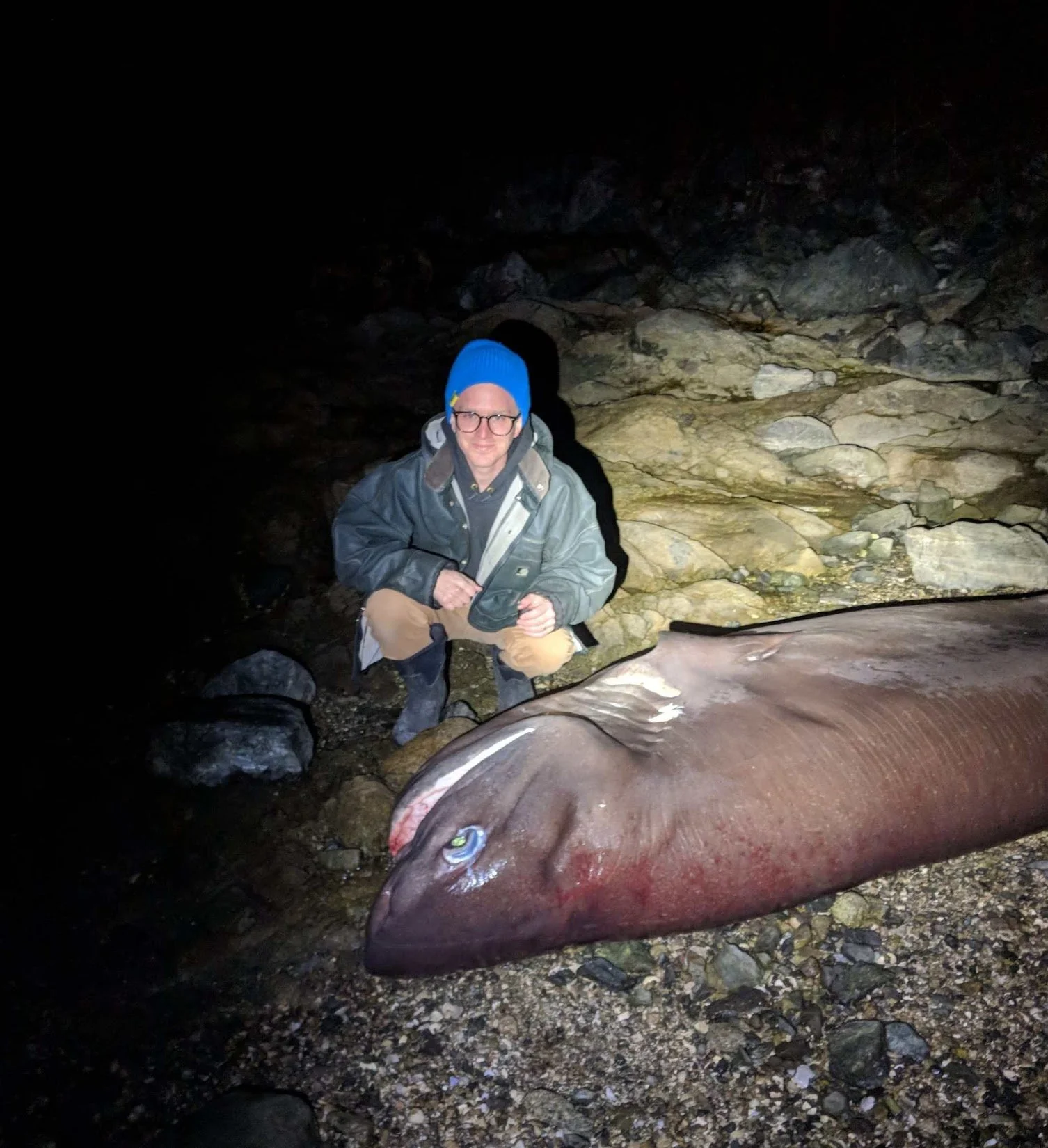
Brian with a sixgill shark
As a recreational SCUBA instructor since 2008, I taught diving in various tropical ecosystems before settling down back at home in BC, here on Vancouver Island, and falling in love with the bull kelp forests of the Salish Sea. I went back to school in 2014, pursuing an undergraduate degree in Biology from Vancouver Island University. Around the same time, ‘the blob’ marine heatwave hit the coast of BC and I watched first hand as extreme ocean temperatures wiped out the bull kelp at all my favourite dive sites. I quickly got involved with local kelp restoration efforts, for which National Geographic gave me my first underwater drone. I eventually transferred down Island to the University of Victoria where I completed my CAUS scientific diver training, organized a necropsy for a pregnant sixgill shark.